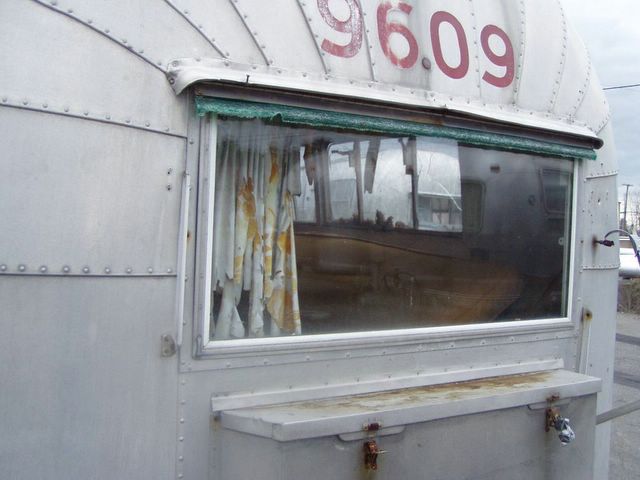
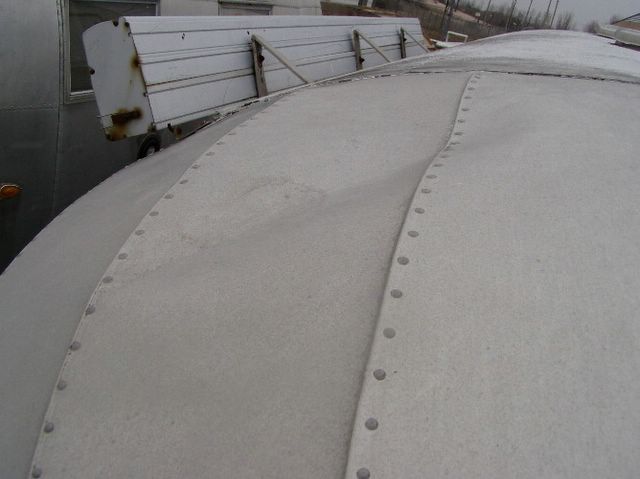
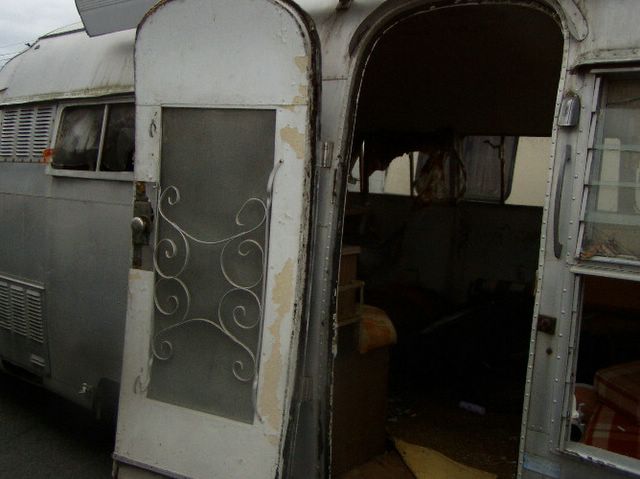
August 18, 2006

#22 - What Kind of Aluminum is That?

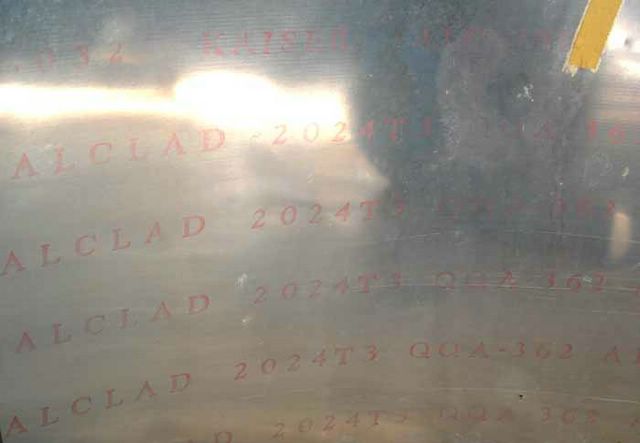
I often get asked what kind of aluminum was used on vintage Airstreams. The answer is stenciled on the back of most of the original exterior skin segments on my 1956 Caravanner:

KAISER ALCLAD 2024-T3 QQ-A-362.

Kaiser is the manufacturer of the aluminum sheet. Alclad means the 2024 alloy has a thin layer of 99% pure aluminum cladding on both sides. T3 is the temper of the alloy. QQ-A-362 is some sort of federal standard specification for corrosion resistance, or something. I believe the QQ system has been replaced by ASTM numbers. Gotta look that one up!

Altough it isn't marked on the sheet, I believe all Airstream skins through the 1960s and probably even the 1970s were .032" thick.


Back of Aluminum Sheet

If you ever wondered what other metals are in 2024 aluminum alloy, (you need to spend less time thinking about Airstreams and) here's your answer as percentages of the total weight:
  • Aluminum = 90.7 - 94.7%
  • Copper = 3.8 - 4.9%
  • Magnesium = 1.2 - 1.8%
  • Manganese = 0.3 - 0.9%
  • Iron = Max 0.5%
  • Silicon = Max 0.5%
  • Zinc = Max 0.25%
  • Titanium = Max 0.15%
  • Chromium = Max 0.1%
  • All Others = Max 0.15%

August 14, 2006

#21 - Appliance Gallery

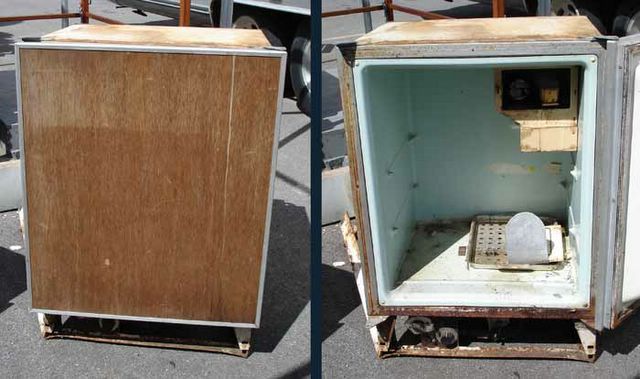
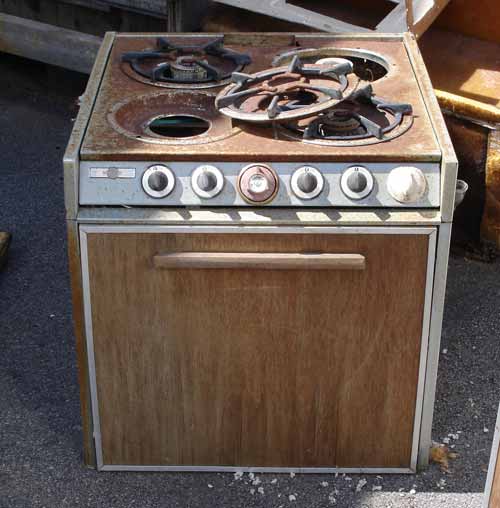
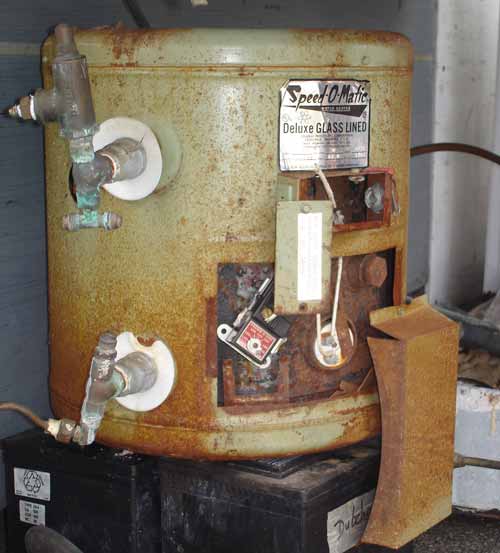
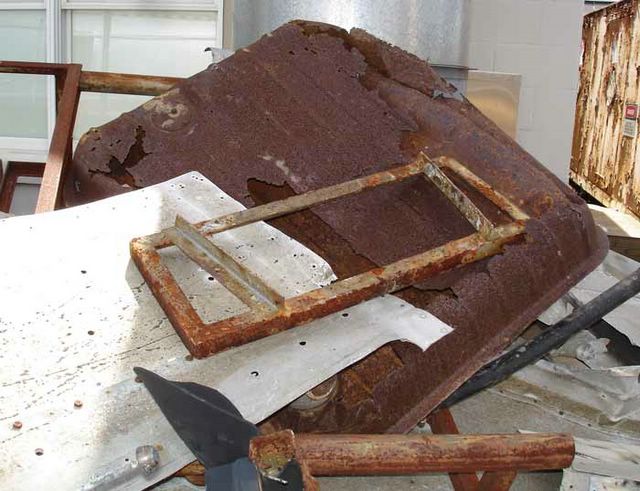
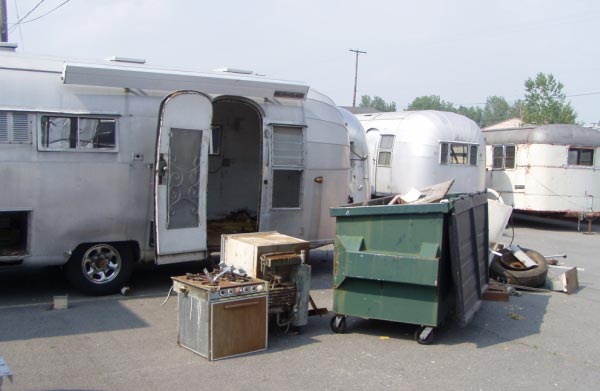
You can see from this collection of appliance and tank photos why I say there's almost nothing worth saving. I briefly thought about trying to bring that fridge back to life...but then I smartened up.


Outside and Inside of 1960s Fridge


1960s Stove


Deluxe Glass Lined Speed-O-Matic Water Heater


Extreme Black Tank with Pressure Gauge!


The gas tank in the scrap pile was used as a gray tank!

August 12, 2006

#20 - Assessing Frame Rust

A close inspection of our chassis yielded some expensive news: major repair will be necessary.

With a 50-year-old trailer I expected to find significant rust on the steel frame. I was hoping we'd need a few patches, a few repaired welds, a good wire brushing and some rust-neutralizing paint. Unfortunately, we've got bigger problems.

While none of the frame members have separated from each other, we can see rust-through in both the C-channel cross members and (more significantly) in the box-channel rails running the length of the trailer. The back three feet of the frame are really bad. In addition to rust perforation, the last cross member was drilled several times for various plumbing and electrical needs.

You may have to click on the photos below to see the detail.


Center Section of Chassis has Rusty, but Repairable, Cross Sections


Rear Section of Chassis is So Bad it Must be Replaced

Replacing a cross member can be done by simply cutting the old one out and welding a new one in its place. The same is true for outriggers. But replacing the main rails is really impossible without effectively building a new frame.

After talking it over with Colin, I decided not to have a new frame built from scratch. Instead, we'll have Colin's welder use a combination of techniques to repair and strengthen the original chassis. It may not be as pretty as a new frame, but it will be just as strong and save a lot of money in time and materials.

Here's what Colin's crew will do:
  1. Cut off and entirely replace the last few feet of the chassis that are the worst. We'll have all new rails, outriggers and cross members in the back.
  2. Replace a couple cross members in the middle of the trailer that are beyond patching.
  3. Patch rust holes in all the other cross members and main frame rails that are generally good enough to save. The rust will be cut out and new steel welded in place.
  4. Slide new box channel inside the original box channel rails to strengthen them significantly.
This last step of reinforcing the main rails by lining them with slightly smaller box channel is a rather new tecnique Colin has developed. He's used it on other trailers with great success. It does add a little weight, but it's the most cost-effective way of getting an extremely strong frame without replacing it.

August 11, 2006

#19 - Completely Gutted

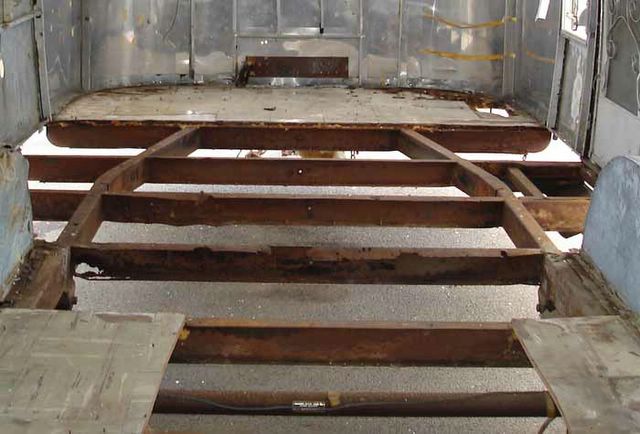
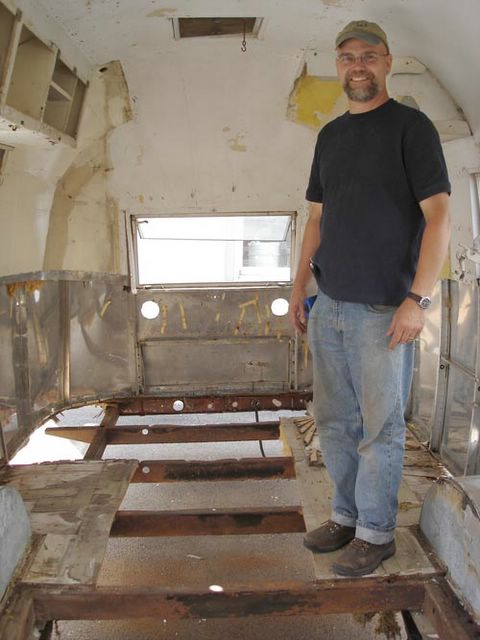
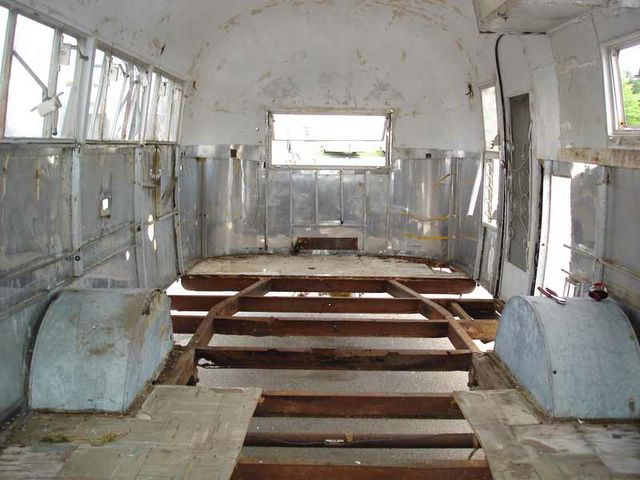
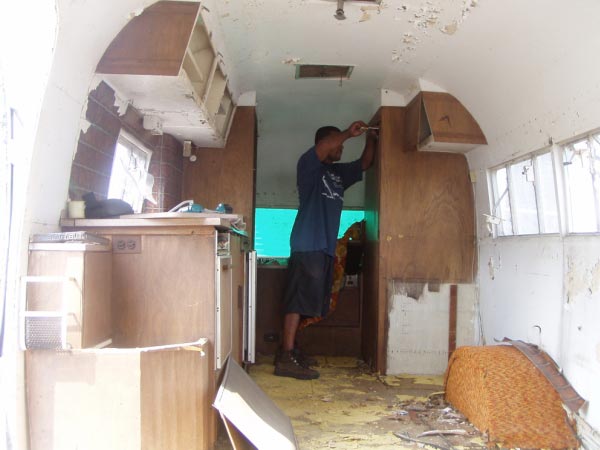
Yesterday, I drove to Plattsburgh to finally get a look at the results of Santos' and Colin's gut job. Almost everything but the metal is gone. As Colin said with a wink, "It's ready to be towed to the scrap yard." A little floor was left for now to provide some structural rigidity to the shell/chassis during restoration.

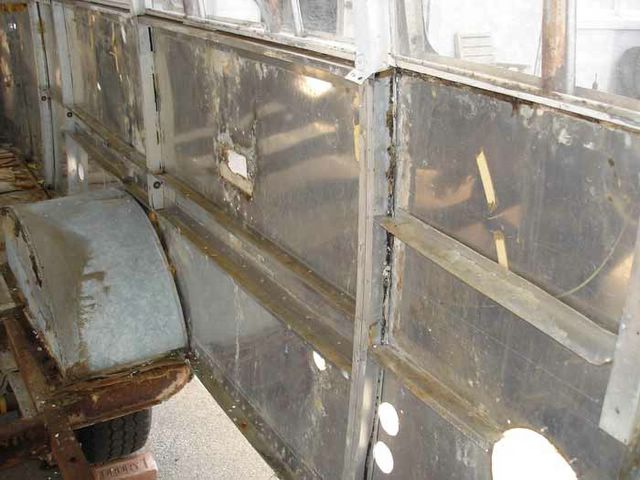
In gutting it, Santos filled two dumpsters plus he collected at least a dumpster full of scrap metal. You can see in the photos below how completely they gutted it. The aluminum sheets from the lower inside walls have been saved for reuse where possible.

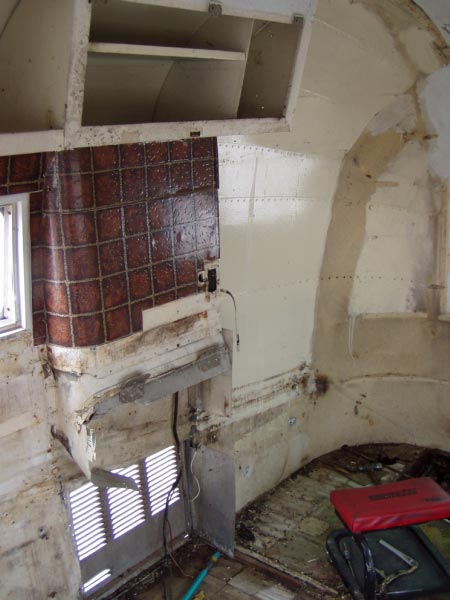
Here's Colin standing inside the shell. You can see the holes where the Bargman No. 6 taillights were temporarily removed. Eventually the upper cabinets and the rest of the inside walls have to come out so new wiring and insulation can be installed. That will happen after the frame is repaired and the new floor is installed.


Looking Towards Rear


Looking Towards Front


Rear Curb Side


Street Side

July 29, 2006

#18 - Work Begins!

Back in December (Post #7), I said we'd start work on the Caravanner in the late winter or early spring. We're a little behind schedule, but today Colin's staff started the rebuild. The first few days of work are demolition. We have to get a good look at the steel chassis frame to know where to start the restoration, so Colin's crew has to remove the floor.

Everything near the floor is coming out of the inside. And almost everything is going in the dumpster. I wish we could save and re-use cabinets or something, but it's all bad. The only thing we'll save from the inside are the aluminum overhead lockers.


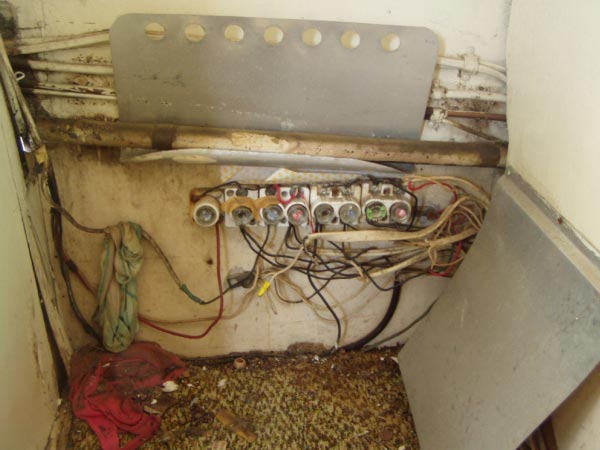
Santos got to do most of the dirty work. He removed the appliances, plumbing, exposed electrical, various vents, base cabinets, and lots of miscellaneous relics...


Santos Removing Cabinets


Black Tank Mess in Rear Center


Fuse Panel with 8 Circuits


Partially Gutted


Faux Brick Must Go


Vintage Aluminum Polish Found in the Rubble

A Black Power Pick! This One's A Keeper.


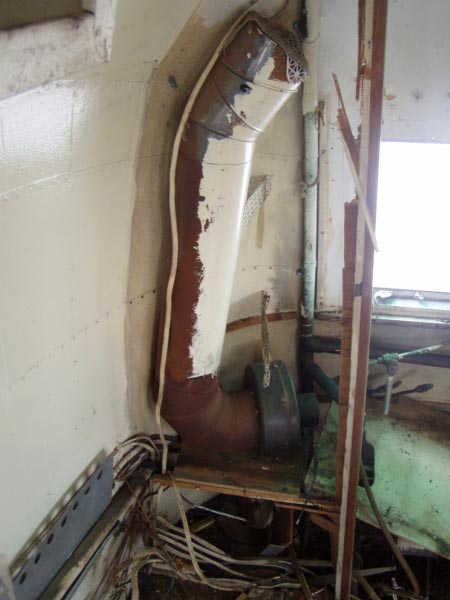
Giant Exhaust Duct


Hey! Something Worth Saving: A Nice Galvanized Wheel Well

June 23, 2006

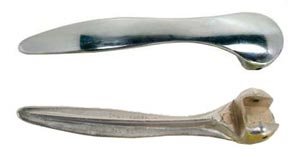
#17 - The Rare Bargman H-20-2 Lock

Of all the old trailer main door locks, the early-1950s Bargman H-20-2 ranks among the most rare and most beautiful. Used by Spartan and Airstream, it disappeared by the late-1950s.

Unfortunately, today the originals are usually found broken. Mine is no exception; the long sleek contoured handle is broken right off and needs to be replaced.

In another great stroke of luck, tonight I found a new old stock H-20-2 handle on eBay in mint condition. It had "Buy it Now" on it, so I snapped it up. The seller said it was left over from his vintage trailer business.


Bargman H-20-2 Handle (Price Delivered: $132.95)

May 16, 2006

#16- Hehr Roof Vents

In the 1950s and 1960s, most travel trailers used nearly identical 14" square roof vents made by Hehr. The cover was flat on top and it raised straight up with two screw-type lifters. The lifters were made by LaDeau and it says so on the knobs.

According to the old owner's manual, you're supposed to lubricate the lifters every 6 months so they don't seize up, but no one ever did so most of them are shot. My trailer has three roof vents (6 operators) all the vent covers are bent and the lifters are worn out.

Fortunately, all these vents are pretty much the same. Some have 115VAC or 12VDC fans in them, but most don't. I've been buying used vent assemblies on eBay so that I will have all the parts I need to construct three perfect vent assemblies when the time comes. I've got 4 now.

For 2 good lifters, or 1 good lifter and a a good cover, I've been paying up to $150 delivered. I know that seems crazy, but good original parts are hard to find and spending hours trying to fix a bad one is expensive, too. Here's an example of what I've been buying:


Hehr Vent Assembly Showing Underside w/ 115VAC Fan and Top of Cover

Even after all this expense, there's a chance I may not use them as complete units. Colin and I are working on a way to use a modern Fantastic Vent instead, but to make it look like the original from the outside by putting a vintage aluminum cover on the new vent body. The advantage is that the Fantastic fans are much more quiet and efficient than the old aluminum Hehr fans.

April 20, 2006

#15 - Mystery Receptacle

Many 1950s & 1960s Airstreams have an odd outlet about window height on the curb side of the trailer. It has a screw-on cap and a little chain. Many people mistake this for a 110V convenience outlet, but it is really a place to attach a removable porch light. These removable porch lights are extinct, but every once in a while, one will turn up on eBay. I found this new old stock receptable on eBay this week. Now all I need is the light. They came in several different styles. Keep your eye out for me!


Porch Light Receptacle (Price Delivered: $39.81)

March 26, 2006

#14 - A Wet Bath

Rusty & Wendy Fordham just sent me an email telling me about their very nice original 1956 Flying Cloud Custom. The serial number is O 3402. RJ Dial has some great photos of it in his archives. It's the second trailer on the page. It looks more like a Caravanner to me, but that's typical of the inconsistencies in the early- to mid-50s.

There's a great photo of the trailer's wet bath. Wet baths were prevalent in Airstreams of that era. I'd like to create one in my trailer, although my original layout was for a side shower/closet and a rear center toilet hidden in a cabinet (see post #3). Wet baths are a great use of space. Very compact, but they get the job done. To take a shower, just pull a shower curtain in front of the door.


Rusty & Wendy's 1956 Wet Bath

March 24, 2006

#13 - More Shopping

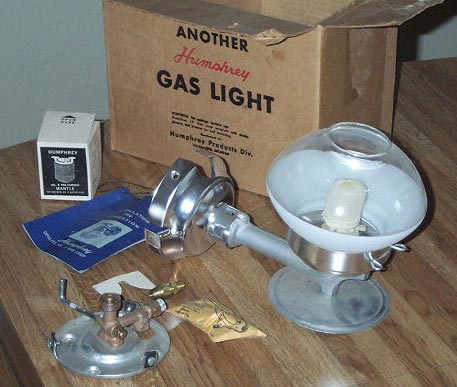
Through sheer luck, I came across this Humphrey Opalite No.3 (or 3T) interior gas lamp on eBay. This is a great find because this style has been out of production for years and was original to 1956 Airstreams. I see them a lot on eBay, but always used and with parts missing. This one's in brand new condition with all the original stuff in the original box. My 1970 Wally Byam Stores catalog shows it along with two other later styles of Humphrey lamps. Here's the description for the Opalite version:
Popular model and used in thousands of travel trailers. For beauty, efficiency and durability at modest cost. Dual outlets for easy installation, and once it's up, there's nothing to rust or corrode. Comes in copper, brass or aluminum finish to suit any decor. Half-frosted Pyrex globe, hi-temp ceramic burner nose and Humphrey tie-on mantle included.
When you're boondocking and want to save your batteries, having a propane lamp is a big help. Remember, that one 12w light bulb in a 12v system draws 1 amp from your batteries. Humphrey was purchased by Paulin and still makes a style of gas lamp that you can use in your vintage trailer.


Humphrey Opalite No.3 Gas Lamp (Price Delivered: $51.86)

The only thing that isn't perfect with this one is that the included pre-formed "hard" mantle turned to dust. That's okay, because hard mantles aren't used in travel trailers. They don't hold up to road vibration, so you need to buy soft tie-on beret type mantles.

March 01, 2006

#12 - Shopping for 1956 Airstream Parts

While waiting to start my restoration, I've been hunting down parts I know I'll eventually need. Being "in the business," I certainly have an advantage with some items. For instance, Vintage Trailer Supply already sells all the rubber gaskets and seals I'll need.

But there are some things I need to find elsewhere. This week I scored some great items on eBay (all in excellent condition)...


1950s Bargman #4 License Plate Light (Price Delivered: $68.95)


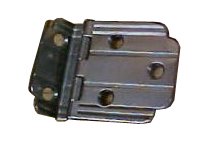
Lot of Fifty 3/8"-Offset 1950s Hinges (Price Delivered: $4.16 ea)


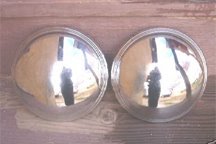
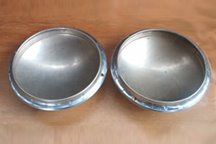
Pair of Vintage Airstream Hubcaps (Price Delivered: $76.00)

February 07, 2006

#11 - 1956 & Civil Rights

The recent passings of Rosa Parks and Coretta Scott King remind me that the mid-1950s were more than Elvis, Chevrolet and Airstream. While Wally Byam and the boys at Airstream were designing my Caravanner in 1955, something much more significant was happening in Montgomery, Alabama. Rosa Parks was kicking the civil rights movement into high gear with a bus boycott that, in 1956, would lead to a Supreme Court decision striking down segregation on public buses. Of course 1956 was also the year the state of Alabama outlawed the NAACP and Martin Luther King, Jr's house was bombed. The work had just begun...

January 14, 2006

#10 - Heartbreak Hotel or Love Me Tender

Since my Caravanner is 10 years older than I am, I spent a few minutes browsing the Internet to learn more about American culture in 1955 and 1956, the years my trailer was being designed, built and sold to the first lucky owner.

Popular music can be a great window into the soul of an era.

As the new year of 1956 began, Tennessee Ernie Ford was just finishing a 6-week run at #1 of his hit song Sixteen Tons.
"Sixteen tons, and what do you get? Another day older and deeper in debt."
Seems appropriate for taking on an Airstream restoration, don't you think?

Other hit songs in 1956 seem to confirm the Airstreamer's plight. Sixteen Tons was displaced at #1 by Dean Martin singing one of my favorites, Memories Are Made Of This. Dean lasted five weeks at #1.

1956 was a watershed year for pop music because starting in April, the old school singers like Tony Bennett, Doris Day, Eddie Fisher, Perry Como and Dean Martin who had ruled the early 50s were displaced at #1 by the fresh face of Elvis Presley. Elvis dominated the last eight months of the year, first with Heartbreak Hotel for eight weeks, then with Don't Be Cruel for eleven weeks and finally with Love Me Tender for five.

It seems all these songs were written just for me and my Airstream.

December 10, 2005

#9 - Researching 1956

We'll never know what the interior of trailer #O9003 looked like when it left the Ohio factory. We can look to other '56 Caravanners for hints, but there were many customized options in the 1950s so it's unlikely this one looked just like the others. Before deciding on details for the restoration, I need to do a lot more research about what was going on in the travel trailer world in 1956.

A good place to start is RJ Dial's archives. Thanks, RJ, for creating this priceless resource.

Another good resource is Airstream's original documents. The Vintage Airstream Club has some of them posted online here. In this case, looking for both 1955 and 1956 info is very informative. I found out, for instance, that the retail price on my trailer was probably about $3,100. That's about $22,000 in today's dollars...a bargain for a premium 22' travel trailer, unless you consider these other prices for 1956:
  • Typical Car: $2,100
  • House: $17,800
  • Gallon of Gasoline: 30 cents
  • Loaf of Bread: 18 cents
  • Gallon of Milk: 97 cents
The average annual salary was $5,300 and the minimum wage was $1/hour.

Without a doubt, the best resources for advice and inspiration for my Caravanner are fellow vintage trailer owners. You can meet the most warm and generous people when you reach out in email discussion groups, at rallys, and at AirstreamForums.com. If you own a 1956 Airstream or a 1950s Caravanner, and want to compare notes, please send me an email.

December 09, 2005

#8 - Restore or Customize?

Doing a big project like this, you have to make hundreds of decisions along the way. Many of those decisions revolve around your overall goal in the project. Do you want to restore your vintage trailer to original condition, or do you want to customize it?

My goal for the exterior is to restore it as much as possible. We might have to make a few compromises when original parts or materials are no longer available, but hopefully you'll never notice. Windows and vents may move a bit to accomodate the new appliances and floorplan, but those changes will be in keeping with other 1956 Airstreams.

I don't feel the same way about the interior. If you're really going to use your travel trailer when it is finished, you want to make it really comfortable and practical for the way you intend to use it.

On the other hand, I hate to see the older and rarer trailers fitted with interiors that don't look right for the era. In this case, I hope to accomplish that mid-century feeling with today's comfort.

December 08, 2005

#7 - Waiting for Spring

The real work won't get underway until late winter. At that point, we'll rent a dumpster and start gutting. We'll save anything that is original to the interior or that might be salvageable for another trailer.

After emptying it out, Colin and his techs will remove the lower half of the interior shell and tear out the rotting floor. When they get it stripped to that point, we'll be able to clearly assess what kind of frame work we'll need to do.

For now, I just need to be patient and dream about camping in warmer weather. . .

December 07, 2005

#6 - Michele Calls it "Our Crack Trailer."

Michele has seen the photos. . .but I'm not eager for her to see the trailer in person. It's hard for her to imagine it will ever be as nice as I promise it will be. Frankly, it's hard for me to imagine it.

Michele's a good sport and puts up with a lot, but even she has her limits. To win her approval for this hair-brained project, I made five promises. Here they are, ranked from least important to most important:
  1. The Caravanner would be gorgeous inside and out when finished.
  2. It would have all new systems and appliances so it would be comfortable and hassle free.
  3. She'd never have to deal with the sanitation side of things.
  4. It would not be parked in the driveway until polished.
  5. I'd pace the work over at least a year so the financial drain would be less disrupting (she wasn't smiling when she said this).

December 06, 2005

#5 - Getting it Home

Did I mention I don't own a tow vehicle? When I sold my beloved 1967 Caravel I sold my tow vehicle, too. Michele and I were buying a house and we needed every penny for the down payment. We decided we could live with one car for a while...a little sedan.

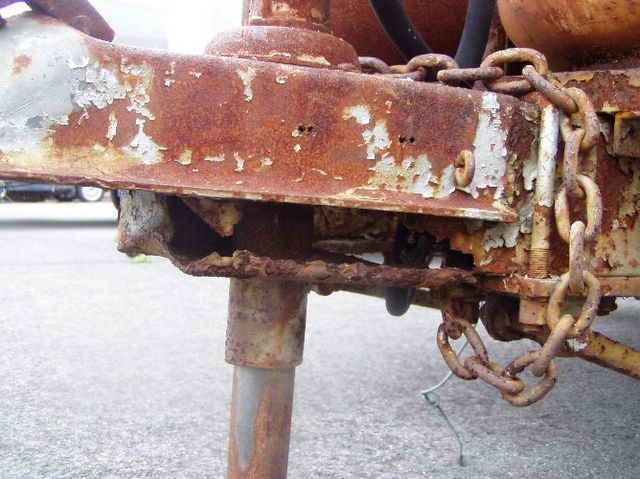
The Caravanner needed to be transported 300 miles from Connecticut to Colin's shop in Plattsburgh. With gas prices high, the cost of commercial towing can be as much as $3/mile. If you need a flatbed it can be even more. It looked towable, except for one thing.


Rotting Frame Below Coupler


Notice the Frame to the Right of the Ball

Professional towing services expect a hassle-free job. When they show up, they expect the trailer to be in safe towable condition with running lights working. If they show up and it isn't ready, they walk away.

I knew that rusty tongue might be enough to kill the deal. And the lights were bad, too. At least the coupler latched well. Colin had a friend who was comfortable with old trailers and he agreed to do it. Keeping my fingers crossed, I sent the driver a set of temporary towing lights and a roll of duct tape. Within a couple weeks, the trailer was on the road to Plattsburgh, it's winter home.

December 02, 2005

#4 - Too Good to Pass Up

I just had to go see it.

I've bought 5 other vintage Airstreams over the past few years; only two of them for myself. I've learned you can't tell the whole story with photos. You have to see it and smell it in person.

I drove the 200 miles to Connecticut, hoping for one of those rare trailers that looks better in person and "just doesn't photograph well." Upon inspection, it was clear that Cliff was an honest seller and the trailer was exactly as he represented it in the photos.

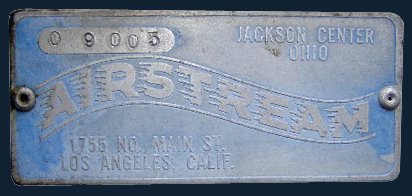
He had wanted my opinion on the price. I told him that, considering the model and year and the fact that it had a great low serial number (#O9003, which means the 3rd Caravanner ever made), it might be worth $2000 to the right buyer. I just wasn't the right buyer. I knew it would need just about everything, from a new axle, frame repair and a new floor, to an entirely new interior, electrical and plumbing, to a host of exterior door, window, vent and shell parts.


Serial Number: O (for Ohio) 9003

I headed for home empty handed. But a few minutes after I left the driveway I called Michele. I told her about the condition and that I still liked it. No matter what 50s trailer I started with, I knew I'd probably need to do extensive frame, floor and system work, so why not start with an inexpensive trailer. If we started with this one, in the end we'd have a brand new trailer inside a classic 1956 shell. We had a discussion about the value of making mortgage payments vs. the value of restoring a vintage Airstream. Overall, though, Michele was not adamantly opposed.

As soon as I hung up and still on the road home, I called my friend Colin Hyde in Plattsburgh, NY. I live about 2 hours from Colin's restoration shop and I knew the only way I could do this is with a lot of his help. Colin restores vintage Airstreams for a living. I'd seen his work and it was first-rate. His attention to engineering as well as aesthetics was just what I needed. I knew Colin would be the guy to do the big projects...especially early on...that I didn't have the skills to do.

I gave Colin a full description over the phone and he agreed it was a project worth doing. I called Cliff back and we agreed on a price significantly lower than my first suggestion. We were both pleased and I turned around and drove back to hand him the check.
November 30, 2005

#3 - Interior "Before" Photos


Step Inside


This is not garbage; its parts (except that orange cooler).
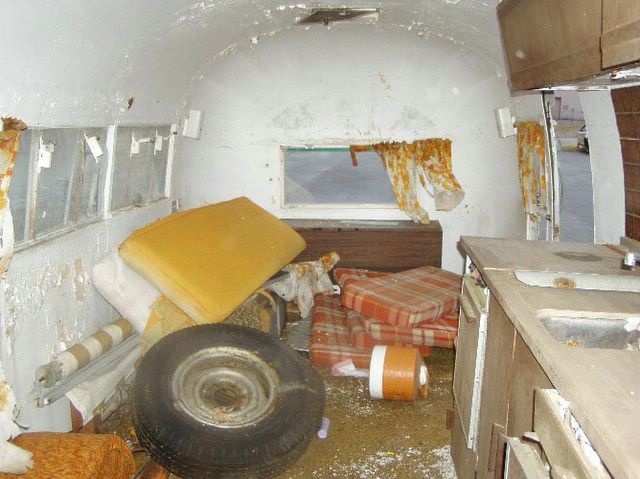

Peeling Paint, Ripped Curtains, Faux Brick


Looking Out the Front Window


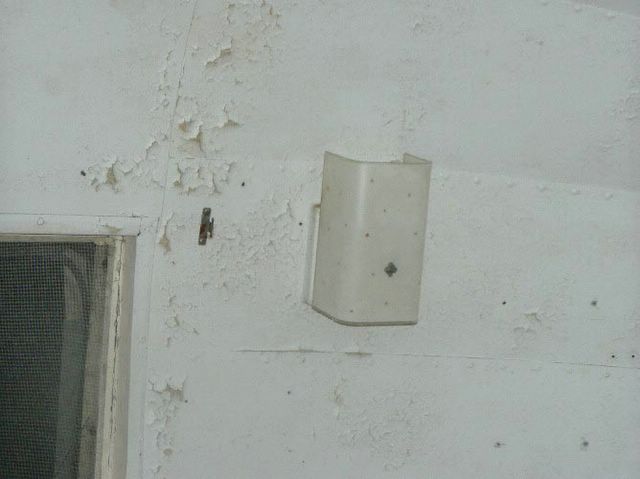
Sconces, Probably Circa 1960s


A Shower...With Curtain Included


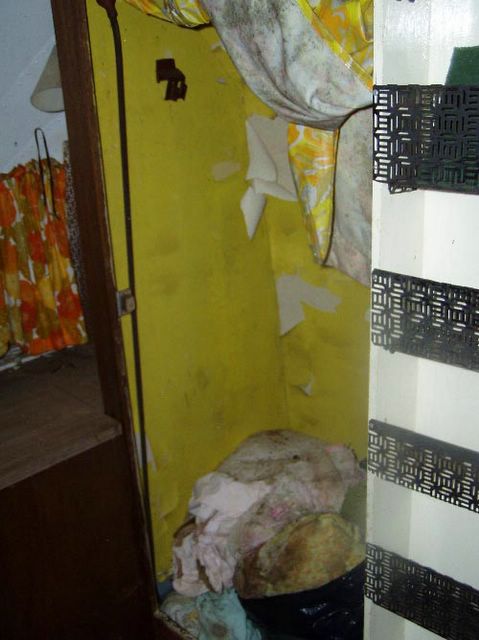
It Came With Linens


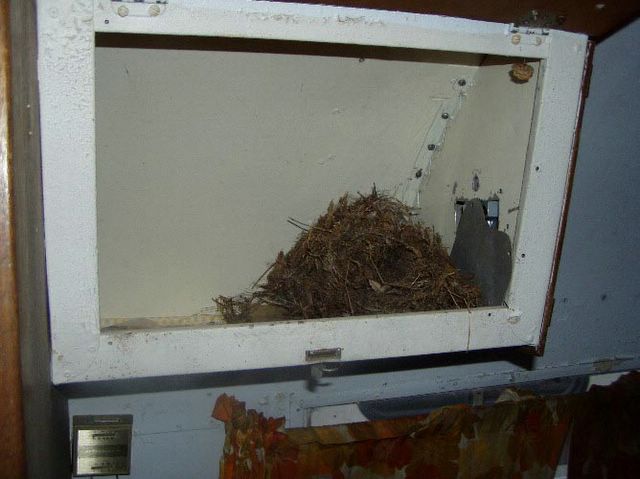
A Bird Nest in an Overhead Bin


Just a Few of the Dozens of Wasp Nests...These in Overhead Vent Screens


New Mahagony Cabinet Faces Circa 1970


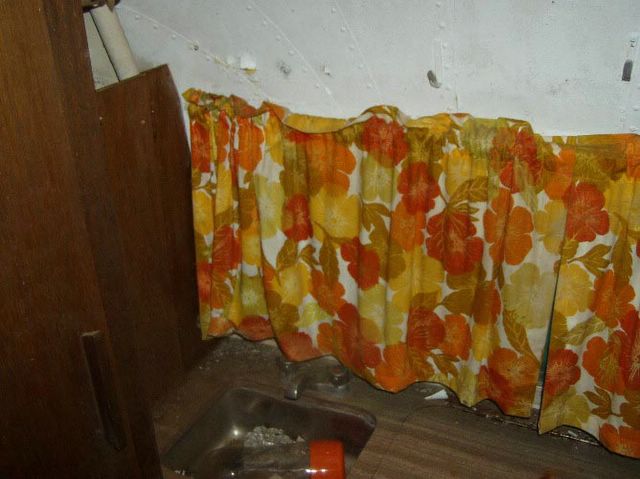
Lovely Curtains


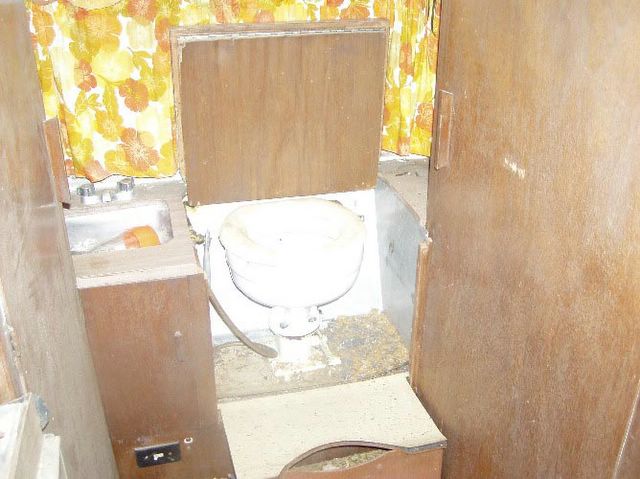
Hideaway Toilet in Rear of Trailer

November 29, 2005

#2 - Exterior "Before" Photos


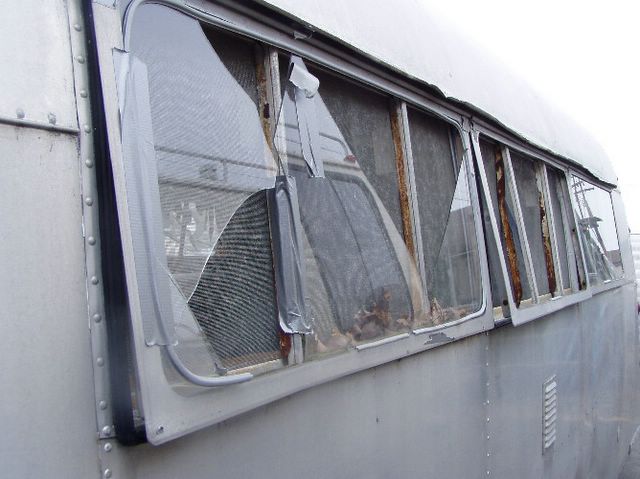
Street Side Windows Broken & Bent


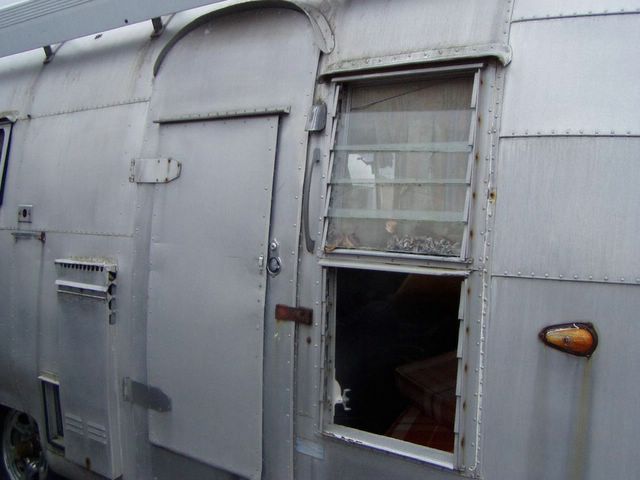
Half a Jalousie Window


Missing Curb Side Utility Door & Serious Bulge Above Tire


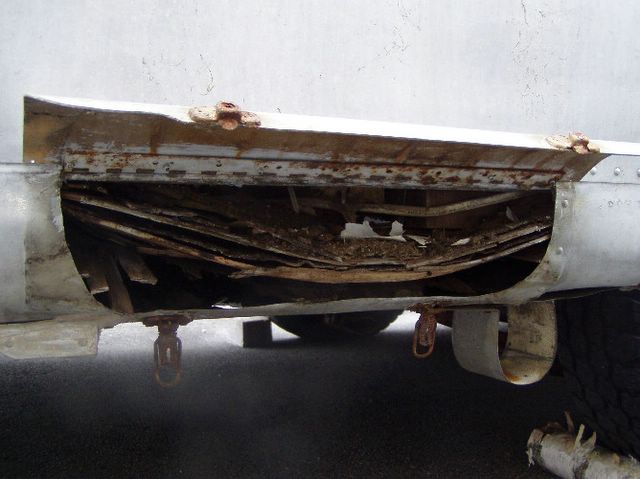
Extensive Floor Rot Hidden By Belly Pan


Dent and Riveted Street Side Tear


Broken Door Lock & 1960s-Style Grab Handle


Front Window & Broken Green Rock Guard


Rear End & Duct Tape


Dent in Front Top & Odd Awning Storage Box


Back Top Dent


I Dare You To Step Inside...